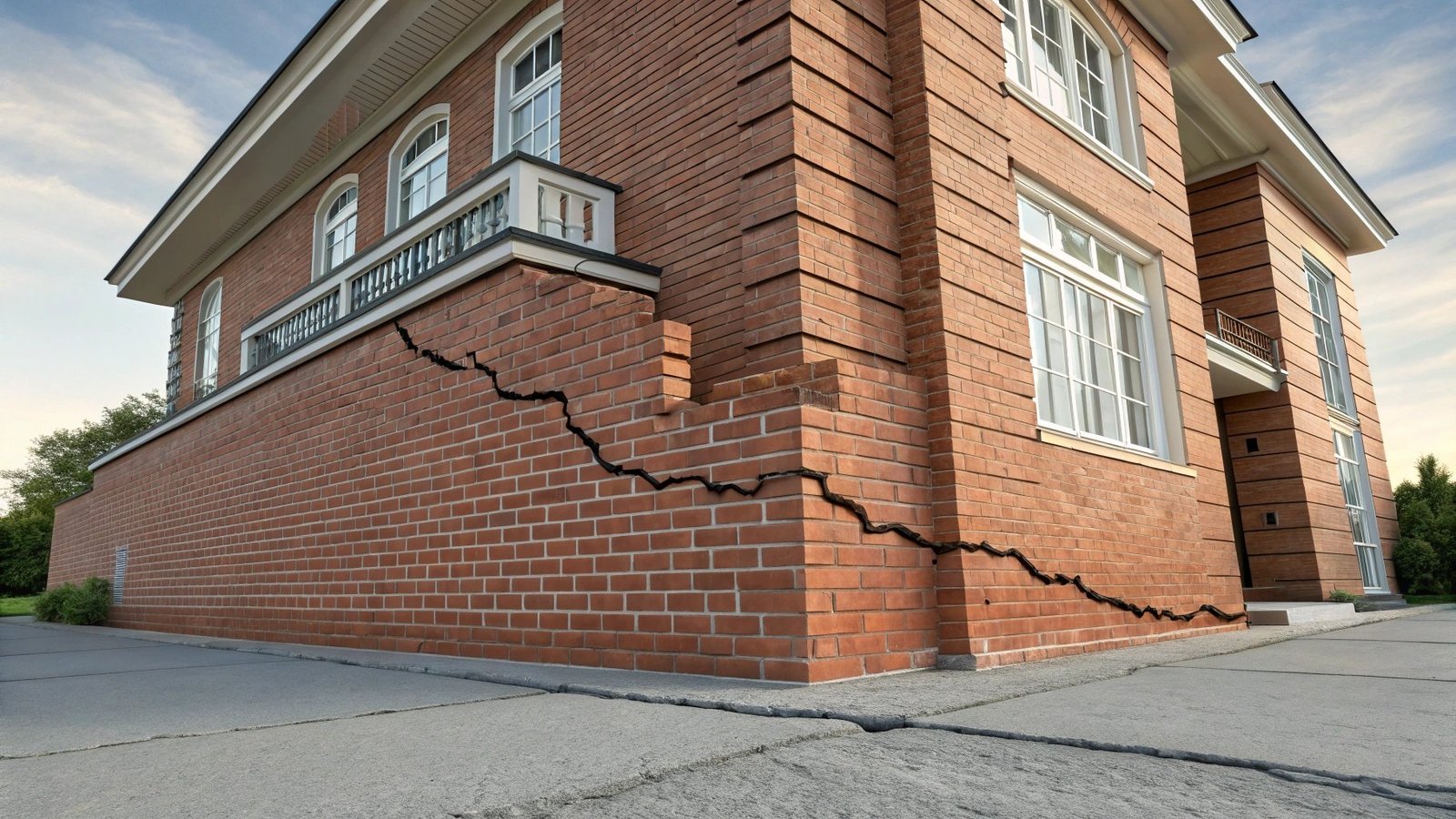
Structural problems are among the most serious—and expensive—defects our chartered surveyors find during building surveys in Watford and Hertfordshire. While minor cracks are normal in almost all properties, subsidence and significant structural movement can cost tens of thousands of pounds to rectify and seriously affect property values.
As RICS qualified surveyors with decades of experience assessing properties across Hertfordshire, we've seen everything from minor historic settlement to active subsidence requiring urgent underpinning. This comprehensive guide helps you understand structural issues, identify warning signs, and know when to be concerned about the condition of a property.
What is Subsidence?
Subsidence occurs when the ground beneath a property's foundations moves downward, causing the building to sink. This is different from settlement (which happens when a new building gradually settles into the ground) or heave (when ground swells upward, often after tree removal).
Subsidence is particularly concerning because:
- It indicates ongoing structural movement
- Repairs are expensive (typically £10,000-£50,000+)
- It can affect property values and mortgageability
- Insurance premiums may increase after subsidence claims
- Future buyers will be cautious about properties with subsidence history
However, not all cracks indicate subsidence, and not all subsidence is catastrophic. Our building surveys help you understand the severity and likely costs of any structural issues.
Common Causes of Subsidence in Watford and Hertfordshire
Hertfordshire's geology makes certain areas more susceptible to subsidence. Understanding causes helps assess risk:
1. Clay Soil Shrinkage
Much of Watford and Hertfordshire sits on London Clay, which is particularly prone to shrinkage. Clay soil:
- Expands when wet and contracts when dry
- Shrinks significantly during hot, dry summers
- Can cause seasonal movement in properties
- Affects shallow foundations more severely
The hot, dry summers we've experienced in recent years have increased subsidence claims across Hertfordshire. Properties on clay soil need careful assessment by qualified chartered surveyors who understand local ground conditions.
2. Tree Root Activity
Trees can cause subsidence in two ways:
Direct Damage: Large tree roots physically disturb foundations or drainage systems.
Moisture Extraction: More commonly, tree roots extract moisture from clay soil, causing it to shrink. The risk depends on:
- Tree species (willows, poplars, and oaks are highest risk)
- Tree size and maturity
- Distance from the property (mature trees can affect properties up to their full height away)
- Soil type (clay soils are most affected)
- Seasonal variations
Our surveyors always assess trees near properties, noting species, size, and proximity to buildings.
3. Leaking Drains
Damaged drainage can wash away soil beneath foundations, causing subsidence. Warning signs include:
- Persistently damp ground near the property
- Lush vegetation growth in specific areas
- Slow-draining fixtures
- Cracks appearing near drains or drain runs
A Level 3 building survey includes drainage assessment, and we may recommend specialist CCTV drain surveys if we suspect problems.
4. Mining and Ground Movement
While less common in Watford specifically, some areas of Hertfordshire have historical mining activity or natural ground movement that can cause structural issues.
5. Poor Original Construction
Older properties in Watford may have shallow or inadequate foundations by modern standards. Victorian and Edwardian homes often have foundations just 2-3 feet deep, making them more vulnerable to movement.
Types of Structural Cracks
Not all cracks are equal. Our chartered building surveyors assess crack patterns, width, location, and other factors to determine severity:
Minor Cracks (Generally Not Concerning)
Hairline cracks:
- Less than 1mm wide
- Common in plaster and render
- Usually cosmetic
- Caused by shrinkage or minor settlement
Fine cracks (1-5mm):
- Often due to thermal movement
- May need monitoring but not usually serious
- Common at wall-ceiling junctions
Moderate Cracks (Require Investigation)
Cracks 5-15mm wide:
- Need professional assessment
- May indicate structural movement
- Repair and monitoring typically required
- Could be historic or ongoing
Our surveys identify whether these cracks are stable (old, not widening) or active (continuing to develop).
Serious Cracks (Require Immediate Attention)
Cracks over 15mm:
- Indicate significant structural movement
- Likely require structural engineer assessment
- May need underpinning or major repairs
- Affect property value and mortgageability
Progressive cracks: Any crack that's clearly widening is concerning, regardless of current width.
Warning Signs of Subsidence
During viewings and surveys, we look for these telltale signs:
External Signs
- Diagonal cracks: Especially at 45-degree angles from windows or doors
- Step cracking: Cracks following mortar joints in brickwork
- Bulging walls: Walls leaning or bowing outward
- Gaps around windows/doors: Frames pulling away from walls
- Leaning chimneys or walls: Visible tilting
Internal Signs
- Doors and windows sticking: Frames becoming distorted
- Floor slopes: Noticeably uneven floors
- Cracks in internal walls: Particularly if wider at top or bottom
- Cracks around door frames: Diagonal cracking from corners
- Gaps between walls and ceilings/floors: Separation at junctions
Pattern Recognition
The pattern of cracking tells us a lot:
Subsidence typically shows:
- Diagonal cracks wider at the top
- Step cracking in external walls
- Cracks on one side or corner of the building
- Associated door/window problems in affected areas
Heave typically shows:
- Diagonal cracks wider at the bottom
- Horizontal cracking
- Floor lifting or slopes
How Our Surveyors Assess Structural Issues
When you commission a RICS Level 3 building survey for a property with potential structural issues, our chartered surveyor will:
Detailed Visual Inspection
- Examine all visible cracks internally and externally
- Measure crack widths using crack width gauges
- Photograph all significant defects
- Note crack patterns and locations
- Assess whether cracks appear old (painted over, dirt-filled) or recent (clean, sharp edges)
Context Assessment
- Check for nearby trees and assess species/size
- Look for drainage issues or damp areas
- Consider soil type and local ground conditions
- Review property age and construction type
- Check for evidence of previous repairs or monitoring
Structural Analysis
- Assess whether movement appears active or historic
- Determine likely causes
- Evaluate severity and risk
- Recommend further investigations if needed
Our survey report will clearly explain findings and provide guidance on next steps, including estimated costs for any necessary investigations or repairs.
What Happens If Subsidence Is Found?
If our survey identifies potential subsidence, we typically recommend:
1. Structural Engineer Assessment
A specialist structural engineer can:
- Conduct more detailed investigation
- Arrange monitoring of cracks over time (typically 12 months)
- Carry out intrusive investigations if needed
- Design appropriate repair schemes
- Provide detailed cost estimates
2. Monitoring Period
For cracks that may be historic, engineers often install crack monitoring devices. This tells whether movement is:
- Stable (no change - likely historic)
- Seasonal (varies with weather - may be manageable)
- Progressive (continuously worsening - requires action)
3. Tree Management
If trees are the cause, options include:
- Tree removal (with specialist insurance agreement)
- Crown reduction or root barriers
- Monitoring after tree work to see if movement stops
4. Underpinning
For serious subsidence, underpinning extends foundations deeper into stable ground. This:
- Is expensive (£10,000-£50,000+ depending on extent)
- Requires specialist contractors
- Takes several weeks to complete
- May be covered by seller's insurance if an existing claim
- Comes with guarantees and certifications
Buying a Property with Subsidence History
Should you buy a property that's had subsidence? Our advice:
If Properly Repaired
Properties that have been underpinned correctly can be fine purchases if:
- Repairs were done by reputable specialists
- You receive guarantees and structural engineer certificates
- The cause has been addressed (e.g., trees removed)
- No evidence of continued movement
- Price reflects the history
Many properties in Watford and Hertfordshire have successfully repaired subsidence and remain perfectly habitable.
Mortgage and Insurance Considerations
- Some lenders are cautious about subsidence history
- Insurance may be more expensive
- Future saleability might be affected
- Complete documentation is essential
Negotiating After Finding Structural Issues
If our survey reveals structural problems, you have options:
1. Request Price Reduction
Armed with our survey report and structural engineer quotes, negotiate a price reduction covering:
- Cost of repairs
- Cost of further investigations
- Contingency for unexpected issues
- Compensation for hassle and risk
2. Ask Seller to Repair
Sellers may agree to undertake repairs before completion. Ensure:
- Reputable contractors are used
- You receive guarantees and certificates
- Work is inspected and approved
- Timescales are realistic
3. Walk Away
Sometimes the best decision is to find another property, especially if:
- Problems are extensive and ongoing
- Repair costs are prohibitive
- The seller won't negotiate reasonably
- Future mortgageability or saleability is compromised
Our survey report helps you make this decision confidently, knowing you've avoided unexpected repair costs that could cost tens of thousands.
Preventing Structural Problems
If you buy a property in Watford or Hertfordshire, particularly one on clay soil, prevention helps:
- Maintain consistent moisture levels: Don't let soil around foundations become very dry
- Manage trees responsibly: Crown reduction of large trees near the property
- Keep drainage maintained: Regular inspection and clearing
- Don't ignore cracks: Early detection prevents expensive problems
- Ensure adequate insurance: Buildings insurance covering subsidence
- Act on survey advice: Our surveys identify potential issues before they become serious
Conclusion
Structural issues and subsidence can seem frightening, but with expert assessment from qualified chartered surveyors, you can understand the risks and make informed decisions. Not every crack indicates disaster, and even properties with subsidence history can be sound purchases if problems have been properly addressed.
Our RICS Level 3 building surveys provide the detailed structural assessment needed to identify issues, understand their severity, and avoid unexpected repair costs. As locally based surveyors with in-depth local knowledge of property in Watford and Hertfordshire, we understand the specific soil conditions and challenges affecting buildings in this area.
Don't take chances with structural integrity. A comprehensive survey by chartered building surveyors gives you confidence in your purchase and protects you from one of the most expensive problems property buyers can face.
Concerned About Structural Issues?
Our experienced surveyors provide detailed structural assessments as part of comprehensive building surveys throughout Watford and Hertfordshire. We help you understand exactly what you're buying.